In aquaculture, oxygen supply defines production capacity. It drives growth, feed conversion, and survival margins. For this reason oxygen supply model is not a technical detail, it is a risk decision.
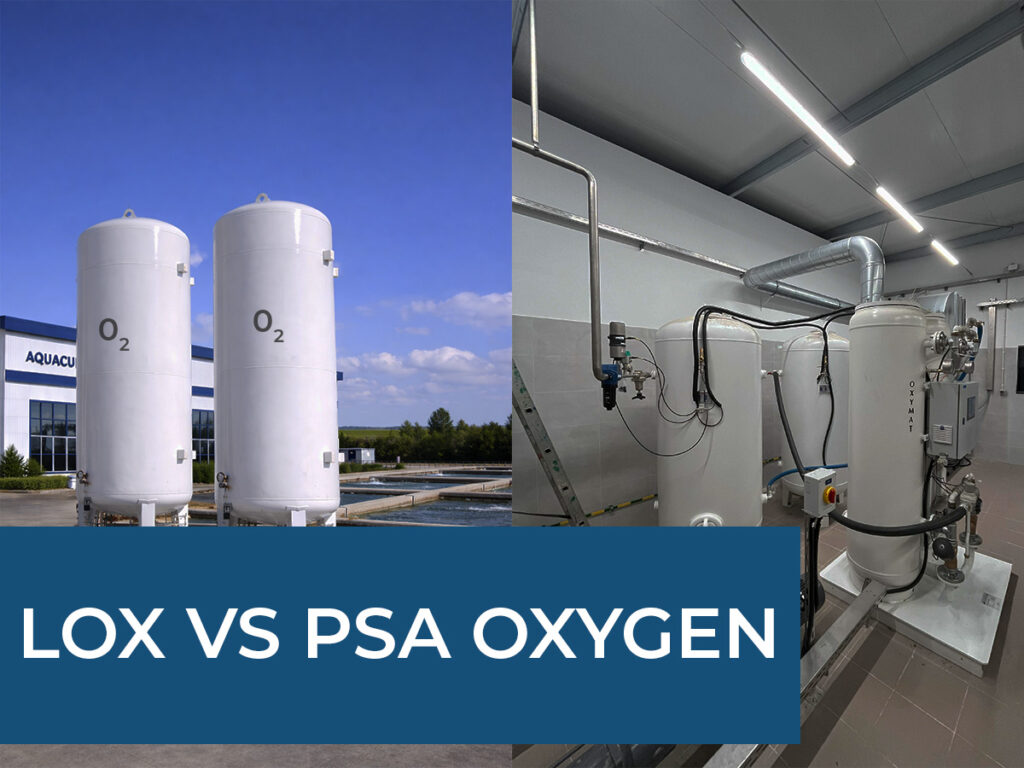
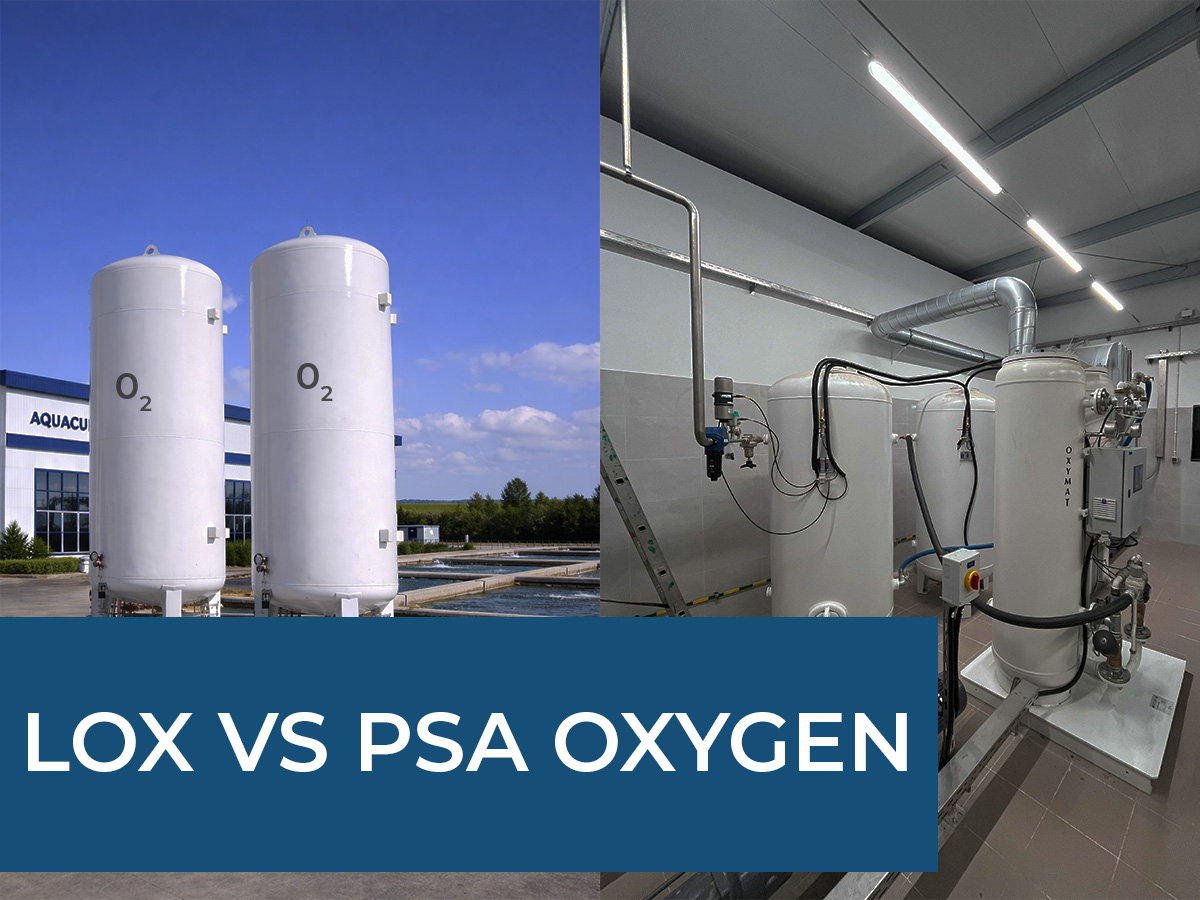
Most fish farms begin with delivered oxygen, which is stored in tanks. In practice, this typically means a cryogenic LOX oxygen tank, where liquid oxygen is delivered by truck and stored in an insulated cryogenic vessel. An evaporator then converts LOX into gaseous oxygen that feeds the distribution system. This supply model can work well, but the challenge is what happens when the farm scales and oxygen becomes mission-critical.
Cryogenic tanks in fish farming
Cryogenic tanks work best when oxygen demand is modest or when the site needs peak capacity without installing on-site production equipment. For early-stage farms, or operations with limited technical infrastructure, LOX can be a pragmatic starting point.
The downside is structural dependency, such as having to add storage capacity just to protect against delivery delays. Oxygen security becomes tied to external factors like route reliability, supplier prioritization, and regional availability. As the fish farm grows, even short interruptions become a production risk. At that point, oxygen is no longer a consumable you can “manage.” It becomes a limiting factor that can dictate production decisions.
What cryogenic LOX tanks do well
- High peak capacity on demand
- High oxygen purity
- Fast ramp-up without production equipment
What cryogenic LOX tanks tend to introduce
- Dependency on deliveries and lead times
- Risk from weather, access, and supplier constraints
- Reactive oxygen management as inventory control
- Cost volatility tied to supply chain and contract structures
- Higher carbon footprint from recurring deliveries
Why oxygen generators become the better long-term option
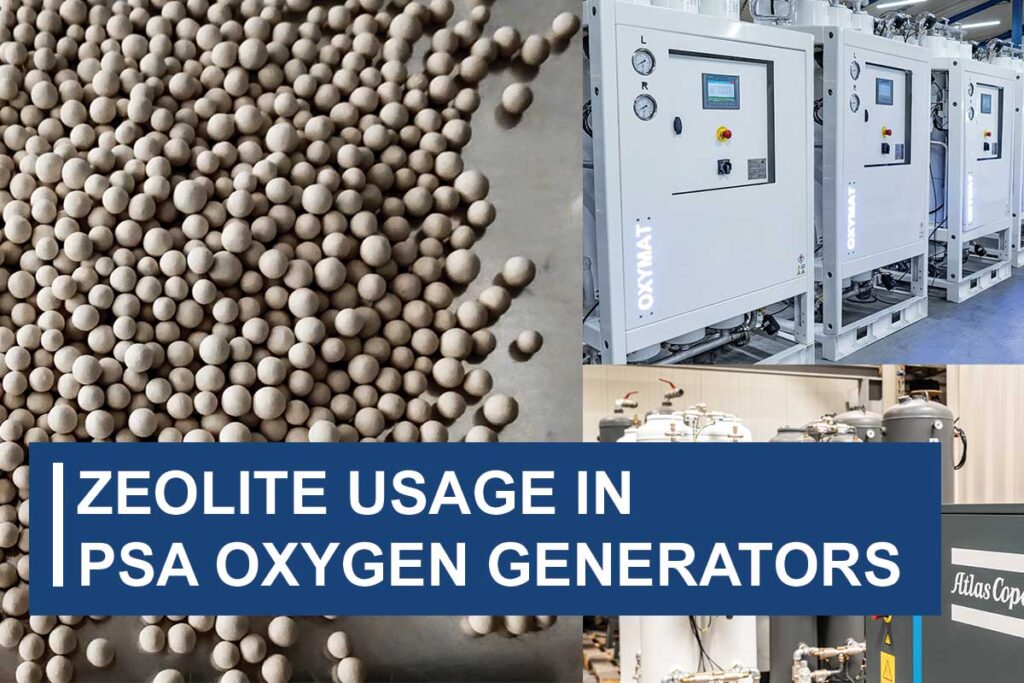
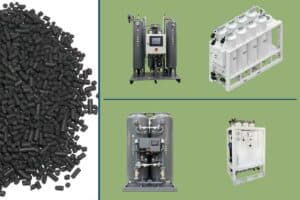
A PSA oxygen generator produces oxygen on-site from ambient air using electricity. The system delivers oxygen at controlled purity, pressure, and flow. With a correctly sized buffer tank on the outlet, supply becomes stable and predictable.
The real upgrade is governance. You shift from ordering oxygen to operating oxygen as a utility. That is a stronger operating model for serious fish farming operations because you can plan around it, measure it, and scale it.
What an oxygen generator system changes in practice
- Oxygen supply becomes capacity you control, not deliveries you depend on
- Operating cost becomes more predictable, driven mainly by electricity and planned service
- Expansion becomes modular, because capacity can be increased in steps
- You reduce exposure to external disruption when oxygen is most needed
Generator-led supply with cryogenic backup
Cryogenics is not obsolete in aquaculture. It is often misused as the backbone. LOX is excellent for peaks and contingency. That is where it is strategically strongest.
A high-confidence model for many farms is generator-led supply with cryogenic storage as backup.
OXYMAT also supports farms that want full on-site autonomy. Together with Stirling Cryogenics, PSA-generated oxygen can be liquefied into LOX on site using Stirling Cryogenerators (read more here), allowing farms to store LOX for peaks and contingency without relying on external deliveries.
How the roles typically split
- Oxygen generator covers the base load and daily stability
- Buffer storage handles short fluctuations and smooths distribution
- Cryogenic LOX covers peaks, backup, and emergency scenarios
This is not overengineering. It is a practical risk position. It protects production and prevents oxygen from being the recurring bottleneck.

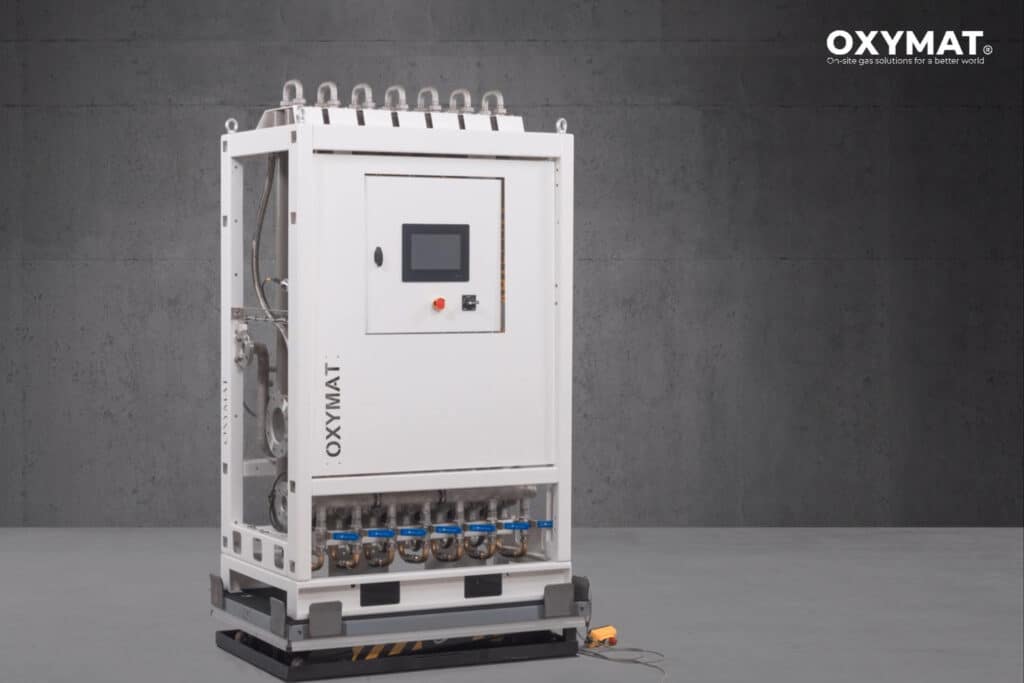
OXYMAT PSA generators
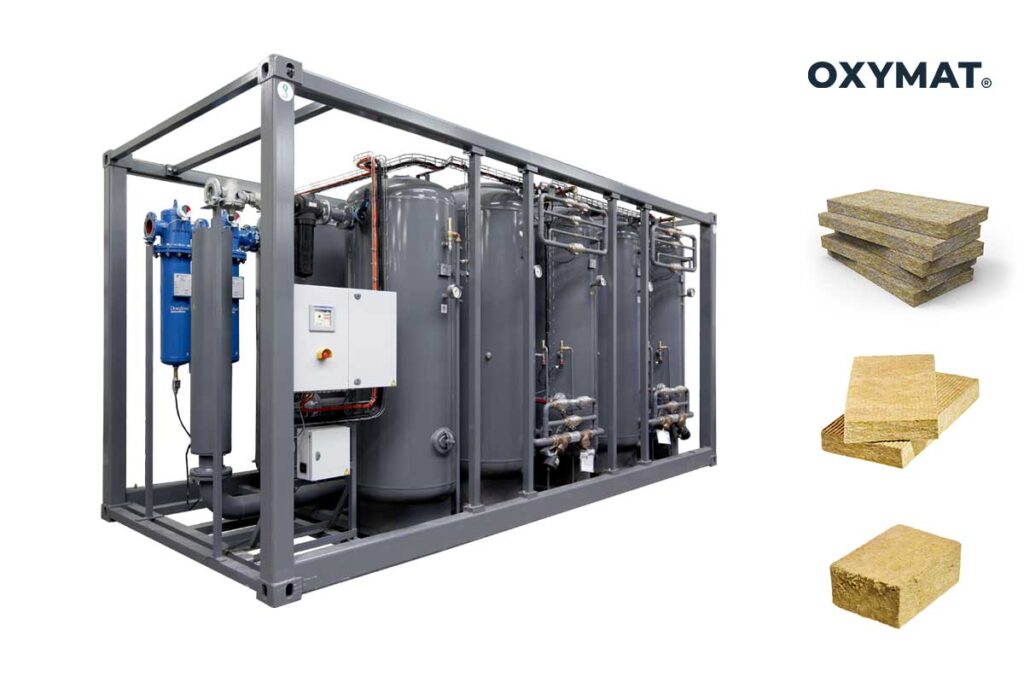
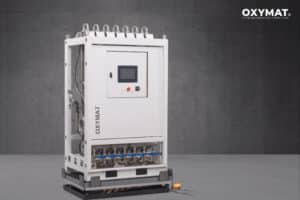
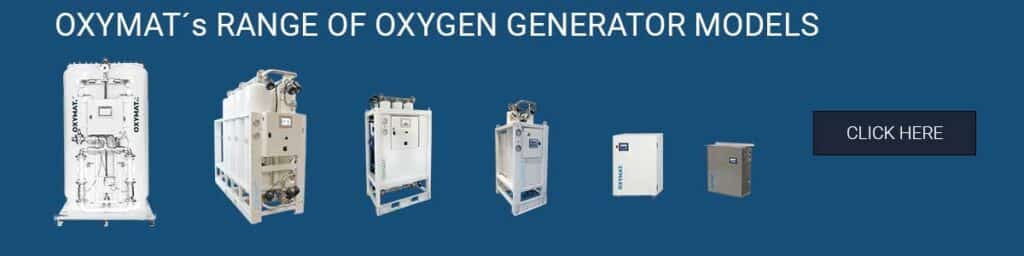
OXYMAT designs and manufactures PSA oxygen generating systems for aquaculture and fish farming. Systems can be delivered as standalone generators, as frame mounted units for technical rooms, or as full turnkey solutions including compression, storage, and control. For farms with higher resilience requirements, on-site oxygen generation can be integrated into an existing backup setup, including cryogenic LOX storage where already installed.
When production scales, an on-site oxygen generation system is the more stable foundation because you control capacity on site instead of relying on deliveries. An oxygen tank is best positioned as a buffer for peaks and emergencies because stored LOX can cover short demand spikes and provide contingency when needed.